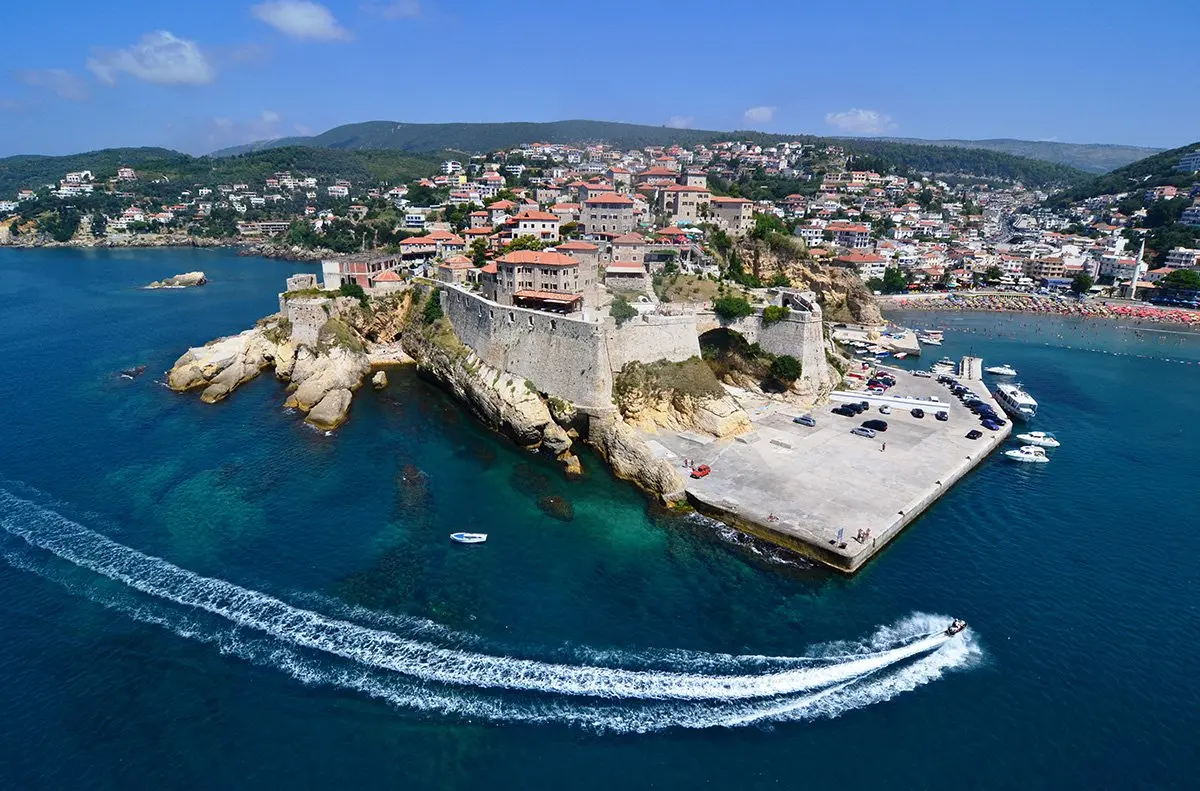
Ulcinj is a town on Montenegro’s southern coast, the seat of Ulcinj municipality, with an urban population of around 10,707 (2011 census), the majority ethnic Albanian. Ulcinj is one of the oldest settlements on the Adriatic coast, believed to have been founded by the Illyrians more than 2,000 years ago, and conquered by the Romans in 163 BC.
Following the division of the Roman Empire, Ulcinj became part of the Byzantine Empire and later the medieval Serbian kingdom, before the Republic of Venice took control in 1405 — a period during which the town was known as a base for Adriatic piracy.
The Ottoman Era
The Ottomans took Ulcinj in 1571 with the help of North African corsairs, and the town gradually became a majority-Muslim settlement, with several hammams, mosques, and clock towers built during this period. In 1673, Sabbatai Zevi — the rabbi who declared himself the Jewish messiah — was exiled to Ulcinj from Istanbul. Ulcinj remained an Ottoman town for more than 300 years until it was ceded to the Principality of Montenegro in 1878.
Landmarks
Ulcinj is known today for its long beach, the nearby Šasko Lake, Ada Bojana island, and its roughly 2,000-year-old fortress. Around 26 mosques stand in the town and surrounding countryside, and Ulcinj remains the centre of Montenegro’s Albanian community.